
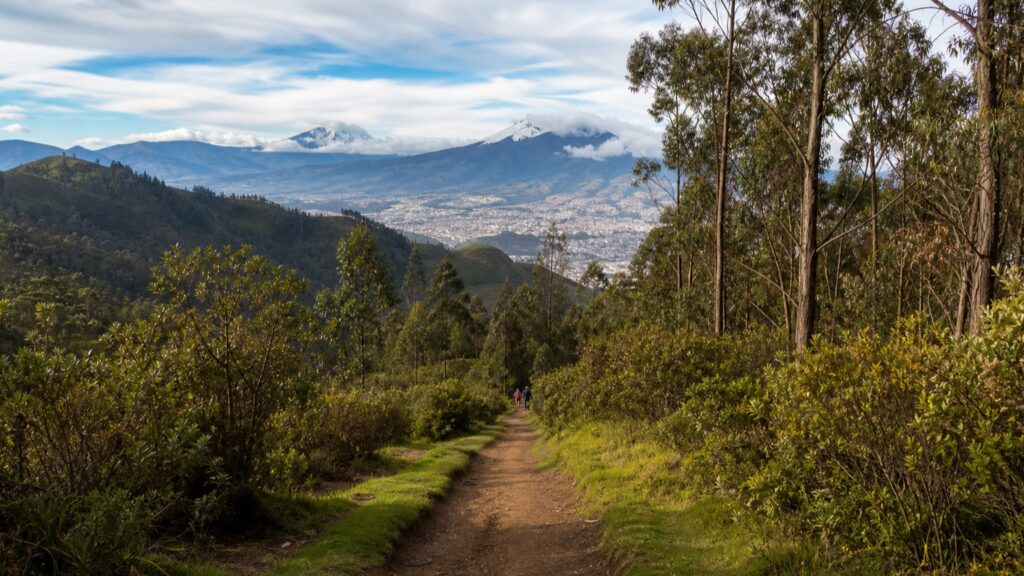
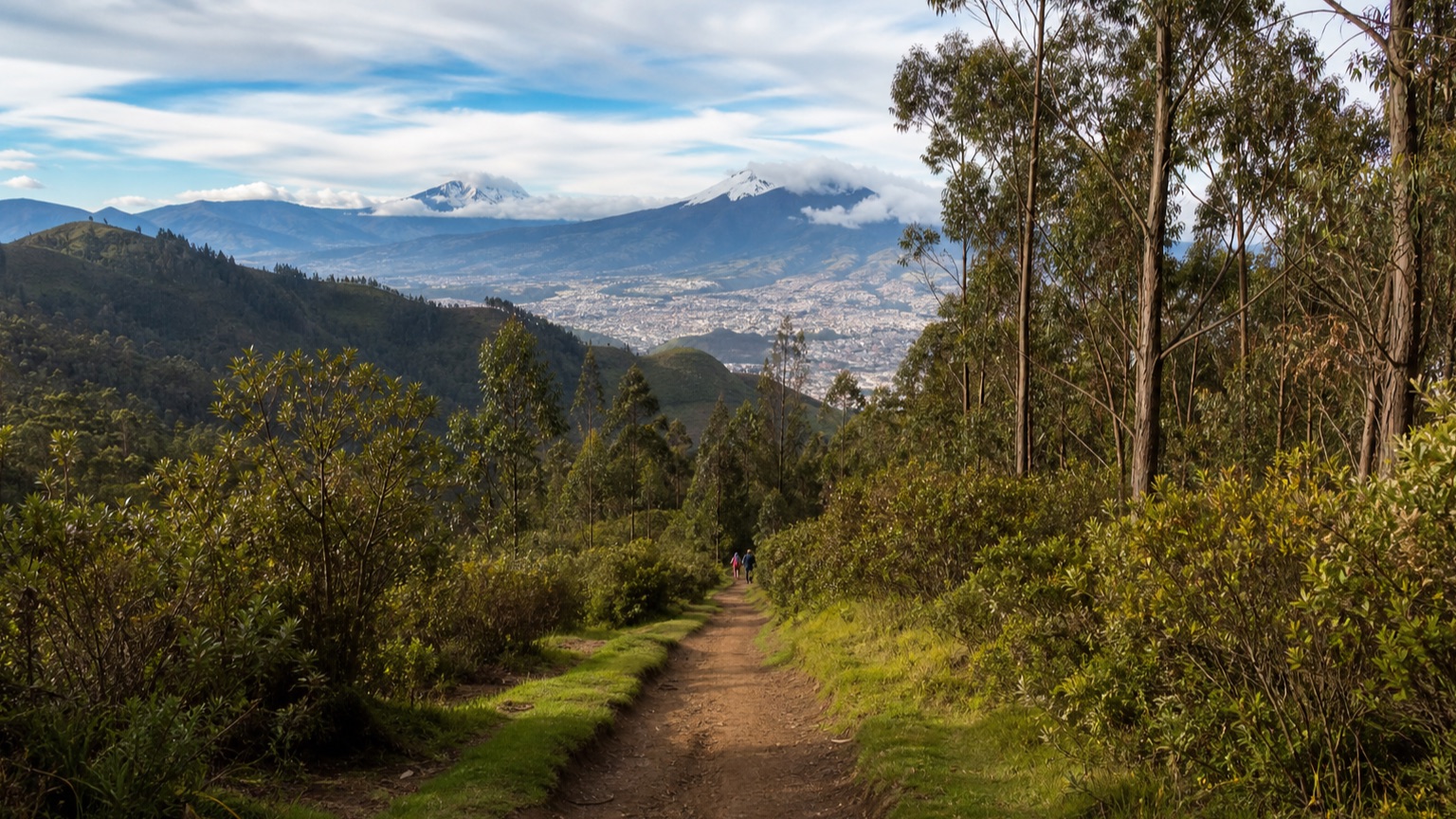
Guangüiltagua Metropolitan Park (Parque Metropolitano) is Quito’s largest urban green space — 580 hectares of eucalyptus forest, trails and viewpoints in the north of the city. It’s the go-to escape for hiking, mountain biking and wildlife-spotting without leaving the capital.
The park is situated in the northern part of the Metropolitan District of Quito, sitting at an altitude of 2,890 meters and bordering the streets of Guangüiltagua, Analuisa and Arroyo Delgado. From here you can see across the Cumbayá Valley.
The park is organized into four distinct zones:
- The parking and playground area
- The eucalyptus forest
- The grassed, arty area
- The picnic area
Since Quito’s city center is fairly built-up, Guangüiltagua Metropolitan Park offers a genuine retreat from the inner-city bustle — a place to reconnect with nature, spot the resident llamas, or exercise with a spectacular backdrop.
How to get to Guangüiltagua Metropolitan Park
You can easily reach the park by bus or taxi.
Travelling by bus
Board the bus at the Ecovía station for $0.25 and get off at the Río Coca station in the north of Quito. From there you’ll need to pay around $2.00 for a taxi to the park entrance itself, or walk if you feel like it.
There are also buses along Avenida Eloy Alfaro — get off at Avenida Eloy Alfaro and Arosemena (Parque Costa Rica), or ride until Eloy Alfaro and Gaspar de Villaroel.
Travelling by taxi
Taxi apps like Cabify and Uber operate throughout Quito. From the city center, expect to pay around $4.00 to reach the park by taxi.
Park entrances and opening hours
The main entrance is on Guangüiltagua street, where you can enter by car (there are 2 main parking areas). Other entrances include:
- Manrique Lara Street – pedestrian and bike entrance
- Mariano Calvache and Colegio 5 de Junio Street, close to the “Capilla del Hombre” (a museum of art by Oswaldo Guayasamín)
- Federico Páez Street, close to the main entrance
The park is open from 5:30am to 5:30pm for vehicles.
What is there to do and see?
Not all of the trees in the forest are eucalyptus — the park mixes native and introduced species throughout its trails.
Guangüiltagua Metropolitan Park offers numerous paths for mountain biking, walking, trekking and jogging, so it’s a great destination if you’re into exercise. On a clear day you can see Cotopaxi, Cayambe and Antisana volcanoes from the higher trails.
In the playground area you’ll find children’s climbing equipment, football fields, exercise machines, basketball courts and food stands (at the Chuquipata parking area you can buy juice, fruit, water, soft drinks and food).
The park also has ornamental structures and artwork throughout the green space, wildlife lookout points, a dog training area, toilets, a campsite and a barbecue area.
Wildlife is a highlight: around 70 bird species live in the park, including 10 different hummingbird species that can often be spotted in the Ashintaco Gorge. There is also a resident herd of llamas roaming the forest, and a small labyrinth that younger visitors tend to enjoy.
Practical tips for visiting
- Altitude: the park sits at roughly 2,890–2,988 meters — if you’ve just arrived in Quito, walk or bike slowly and stay hydrated.
- Safety: the park has constant police surveillance, CCTV cameras and panic buttons, plus staff on hand throughout, so it’s considered safe to visit.
- Bring: sun protection, water, and a light jacket — weather can shift quickly at this altitude.
- Combine with: a visit to Itchimbía Park, Quito’s other major hilltop green space, closer to the Historic Center.
Frequently asked questions
Is Guangüiltagua Metropolitan Park safe to visit?
Yes. The park has constant police surveillance, CCTV cameras and panic buttons, along with staff present throughout to assist visitors if needed.
How much does it cost to enter Guangüiltagua Metropolitan Park?
Entry is free. Getting there costs around $0.25 by bus plus a $2 taxi from Río Coca station, or about $4 for a taxi directly from the city center.
What is the biggest park in Quito?
Guangüiltagua Metropolitan Park is Quito’s largest urban park at 580 hectares, making it considerably bigger than Itchimbía Park (54 hectares) in the Historic Center.
What wildlife can I see at Guangüiltagua Metropolitan Park?
The park is home to around 70 bird species (including 10 hummingbird species), plus a resident herd of llamas roaming the eucalyptus forest.
What are the opening hours of Guangüiltagua Metropolitan Park?
The park is open from 5:30am to 5:30pm for vehicle access; pedestrian entrances such as Manrique Lara Street allow foot and bike access.
Your visit to Quito is off to a great start if you make time for this park — whether you’re after a serious hike, a picnic with a view, or just a break from the city center. If you’re staying at Community Hostel Quito, pair it with a visit to Itchimbía Park for a full day exploring Quito’s green spaces.