
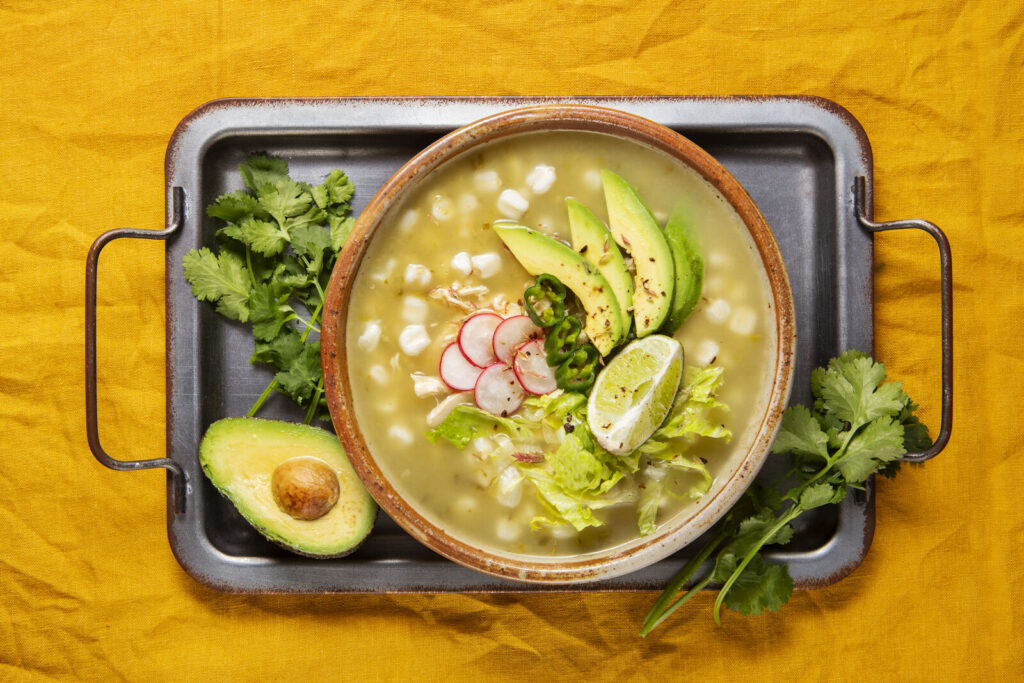
Ecuadorian food in Quito leans hearty and Andean — the dishes you shouldn’t leave without trying are locro de papa (potato and cheese soup), llapingachos (cheese-stuffed potato patties), ceviche and, if you’re adventurous, cuy (roasted guinea pig). Quito’s Andean location means heavier, warming dishes than Ecuador’s coast, built around potatoes, corn and pork.
Quick answer: what to eat in Quito
- Locro de papa – thick potato and cheese soup, served with avocado and ají
- Llapingachos – pan-fried cheese-stuffed potato cakes with peanut sauce (salsa de maní)
- Ceviche – shrimp or fish cured in lime, tomato and onion, served cold
- Hornado – slow-roasted whole pork, a Sunday market staple
- Cuy – roasted guinea pig, a traditional Andean dish worth trying at least once
- Canelazo – hot cinnamon and naranjilla drink, often with a splash of aguardiente
Locro de papa
This thick potato soup, made with cheese, milk and often chunks of avocado on top, is Quito’s answer to a cold, high-altitude afternoon — the city sits at 2,850m, and locro is the dish locals reach for when the weather turns. Look for it as a starter on almost any traditional lunch menu (almuerzo), usually with a small side of ají (spicy salsa) to stir in.
Llapingachos
Mashed potato patties stuffed with cheese, pressed flat and fried until the outside is crisp and the inside is soft, llapingachos are typically plated with a fried egg, a slice of avocado, chorizo or grilled meat, and a drizzle of peanut sauce. They originated in the highlands around Ambato but show up on menus all over Quito.
Ceviche
Ecuadorian ceviche differs from Peruvian-style ceviche: it’s made with tomato juice as well as lime, giving it a milder, slightly sweeter base, and is served cold with chifles (fried plantain chips), popcorn or toasted corn on the side. Shrimp ceviche is the most common version even this far from the coast, since Ecuador’s shrimp is exported worldwide.
Hornado and fritada
Hornado (whole roasted pork, skin crackling and all) and fritada (pork simmered and then fried in its own fat) are the two classic pork dishes you’ll find piled high at markets, usually served with mote (hominy corn), llapingachos and a side salad. Sunday mornings at a local market are the best time to find both at their freshest.
Cuy (roasted guinea pig)
Cuy is a genuinely traditional Andean dish, not a novelty for tourists — it’s been eaten in the highlands for centuries and is typically reserved for celebrations. It’s usually spit-roasted whole and served with potatoes and corn. If you want to try it, ask your hostel or a local guide where to find it fresh, since not every restaurant serves it daily.
Where to eat in Quito’s Old Town
Traditional almuerzo (set lunch) spots around the Historic Center serve a soup, a main and juice for $3–5, and are the easiest way to try several of these dishes at once. For something more social, Community Hostel Quito’s own rooftop bar and restaurant mixes Ecuadorian flavors into its menu with a view over the city, from breakfast through dinner Monday to Saturday.
Drinks to try alongside your meal
- Canelazo – hot cinnamon and naranjilla juice, sometimes with aguardiente, popular on cool Quito nights
- Jugo de naranjilla or de mora – fresh fruit juices unique to the Andes
- Ecuadorian craft beer – Quito has a growing craft beer scene, especially in La Floresta and La Mariscal
Frequently asked questions
What is the most typical dish in Quito?
Locro de papa is probably the most iconic dish specific to the Quito/Andean region — a potato and cheese soup found on almost every traditional lunch menu.
Is Ecuadorian food spicy?
Not inherently — most dishes are mild, and spice is added separately via ají, a side salsa you control yourself rather than a seasoning cooked into the dish.
Is it safe to eat street food in Quito?
Generally yes at busy stalls with high turnover, which means fresher food. Choose vendors with a steady stream of local customers, and stick to hot, freshly cooked items.
What should vegetarians eat in Quito?
Locro de papa (ask for it without the cheese cream if avoiding dairy), choclo con queso (corn with cheese), empanadas de verde, and fresh fruit juices are all easy vegetarian options.
Where can I try an authentic almuerzo in Quito’s Old Town?
Small local restaurants around the Historic Center serve set lunches (soup, main course and juice) for $3–5 — ask hostel staff for their current favorite, since these spots rotate.
Staying in the Historic Center puts you within walking distance of the city’s best traditional lunch spots. Book your stay at Community Hostel Quito and ask our team for their favorite nearby almuerzo spot.